
Point of departure: What is published
NDT Global has posted a description of the work of Development and Planning of a Novel Gas Crack Design Tool Holding Guided Waves. It says that the operator and supplier of ILI are working together: the device uses Lamb's directed waves to search for cracks in gas pipelines. Objective — Improve detection, recognition and measurement of stress corrosion and other cracks.
The public description shall not contain a test report, a reference sample or numerical characteristics. The engineering task statement and the verification programme for such systems are therefore discussed below. This is a self-explanatory review of the OKB, not a statement of the closed part of the work or confirmation of the characteristics of the particular instrument.
The measurement task starts with the type of damage
Identify the reflection, recognize the crack and measure its depth — Different tasks. The positive signal isn't giving a reliable size estimate yet. It may depend on the orientation of non-fault, its disclosure, shape and interaction with the surrounding surface. Therefore, the description of the instrument ' s capability must link each result to a specified class of damage.
Verification requires both individual cracks and complex areas with close injuries. Artificial slit is convenient for repeated testing, but does not automatically represent the diversity of natural cracks. The validation programme must clearly distinguish the origin of samples and understand what each group's findings are.
Why record conditions of wave spread
In the directional control, the wall is involved in forming a course of wave spreading. The choice of the exciter and registration regime determines what features of the object will be visible. In comparing methods, it is important to describe not only the name of the technology but also the specific measurement configuration.
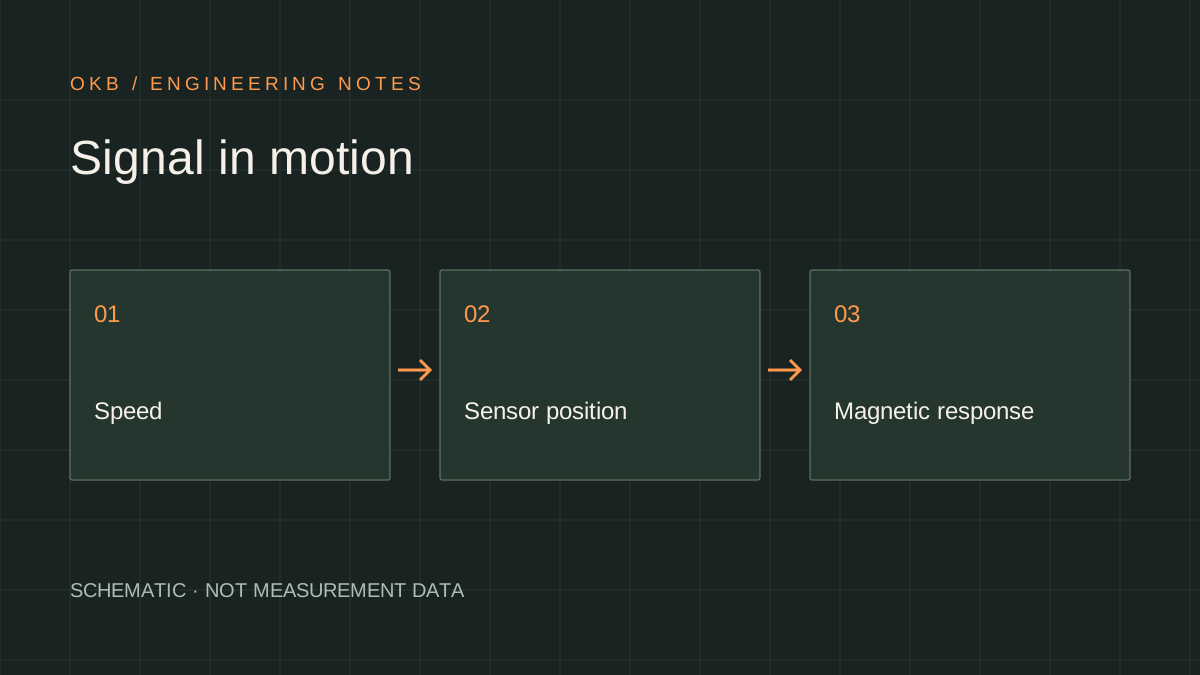
Practical question for the developer — The stability of the useful sign when changing conditions. If the signal changes similar to that from both damage and change in position of the measuring unit, additional information is required. It is useful to map the factors in advance: pipe characteristics, sensor position, speed, surface state and quality of recording. Then check the influence of these factors separately and in combination.
Detection: counting both omissions and false calls
It is not enough to evaluate the system by good examples. For each site under review, an independent response is required to the damage. Otherwise, it is impossible to understand how many real cracks the device missed and how many non-defective features it took for dangerous anomalies.
It is particularly important to consider the different prevalence of classes. If most sites do not contain cracks, a high overall response rate may hide the poor work on rare but significant damage. The report requires separate indicators on types and dimensions of anomalies, as well as a description of the areas for which data quality is not possible to draw conclusions.
Size determination and independent verification
Next level — The comparison of estimated geometry with independent measurement. The method of confirmation itself has limitations. It is important to know what part of the damage it describes, with which spatial step and how the boundary of the crack is defined. A comparison of two numbers without describing these conditions may give the false impression of high or low accuracy.
The measured dimensions should be analysed by range and type of defect. The average error across the sample can hide a systematic under-strain in one group. It's more useful for an engineer to see the distribution of variations and the conditions under which it is obtained than the only average.
Role of software and expert
The processing shall keep the path from the signal recorded to the final classification. For the disputed area, a specialist needs a source, quality marks, a used version of the algorithm and an opportunity to check the reference. A manual change of result should also leave a clear mark.
The application of machine learning requires an independent test sample. The separation of adjacent parts of one site between training and verification can make the result overly optimistic. More meaningful verification considers new conditions and facilities, as well as cases where the system should refer a decision to an expert rather than a reliable automatic classification.
From testing to site application
Before moving the findings to a real pipeline, it is necessary to compare the project conditions with the area of confirmed characteristics. Successful bench test solves a limited task. The service passage shall additionally verify the continuity of the recording, the stability of the supply, the reference and the preservation of the data throughout the length of the surveyed.
The final set of data shall be such that the absence of any cracks found is separated from the lack of reliable measurement. For the developer, this means working together mechanics, electronics and software: the quality of control is shaped by the whole system. For the survey client — The possibility to see where the result is confirmed and where further clarification is needed.
Engineering output
The promise of a wave should be assessed through the specific task of detection and measurement, an independent verification programme and transparent description of the restrictions. A public report about development raises the subject of research, but does not in itself replace validation data.
Sources and further reading
- Open description of work; the quantitative results of the full document are not used in this review.NDT Global — Development and Validation of a Novel Gas Crack Detection Tool Using Guided Waves ↗
The article was originally written in Russian. It summarises the cited sources. For the original text and illustrations, consult the publications listed below.