
What ROSEN considers
The paper by Paul Birkinshaw and Tom Steinworth focused on the development of in-line inspection of unconnected multilayered flexible pipes. The authors view it as an additional source of information within the integrity management programme, which includes monitoring of operating regimes, external surveys and interlayer control. The work describes the research direction and delivery options for the instrument to an object, not a universal way of measuring all layers.
This is the extent of the statement that matters to the reader. The ability to conduct the instrument through a flexible section does not yet mean that the device has equally well examined the internal framework, polymer barrier and external force elements. Lower — Self-engineering of the problem.
The tube as a system of inter-suspension layers
For steel single-layered pipe, residual thickness measurement is often directly related to the strength of the wall. The flexible pipe is not designed to be such that the various components hold pressure, accept tensile strength, limit deformation and ensure tightness. The usual question of "what is the thickness of the wall" therefore falls into a few questions about specific layers and mechanisms of damage.
It is useful to map conformity: the element of design, possible damage, observed sign, appropriate method and remaining uncertainty. Such a map prevents the perception of a convincing representation of an accessible internal element as proof of the integrity of the whole structure. The criterion of sufficiency of data is the expected failure mechanism, not the quality of visualization itself.
Why internal access is not equal to full visibility
The measurement signal passes through a certain physical chain. The sensor and the element of interest may be separated, liquid, polymer and metal parts with complex geometry. Each transition changes the transmission of energy or the structure of the magnetic field. Even if the signal is registered, its origin may be mixed.
When developing the methodology, it is necessary to check separately whether damage has been detected and whether it is appropriate to determine which layer it relates. Samples with known devices and artificial changes of only one element are useful. The change in multiple layers makes it difficult to interpret the test: a good response does not show which part of the defect was detected.
Operating dynamics and baseline status
The flexible site may be modified with load, floating position and temperature. It is useful to compare the two surveys once these conditions are comparable. Otherwise, the in-service form change can be mistaken for accumulated damage and the actual local change — I'm not sure if you want to hide a general remodel of geometry.
The baseline survey is particularly valuable when accompanied by a description of the mode, end-line design and reference. Re-analyzing first identifies persistent design signs, then evaluates differences. The error of the combination must be preserved as a result, since periodic patterns can significantly change signal comparisons by one design step.
How to Link Different Surveys
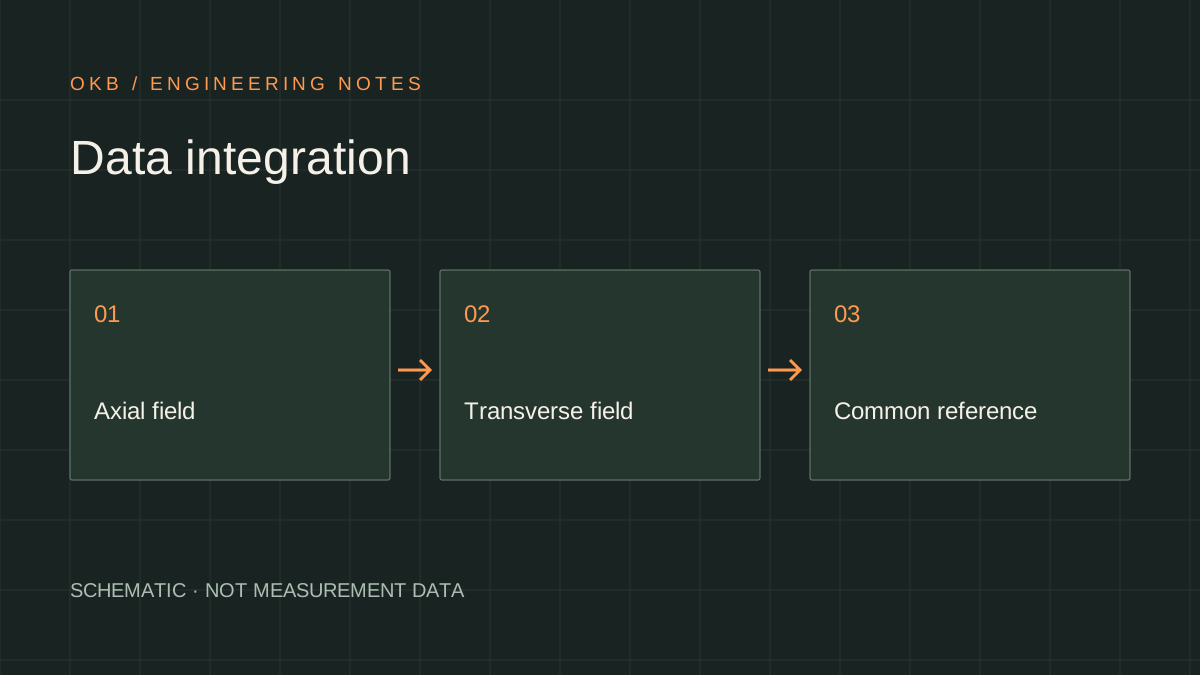
External observation, interlayered environment analysis and internal tube recording answer different questions. The agreement begins with a single time scale and description of the site ' s position. The convergence of adverse signs reinforces the basis for additional verification, but the absence of one does not automatically cancel another.
The analysis programme should resolve the contradictions clearly. For example, calm internal geometry and changes in interlayered space require explanations rather than averaging estimates. The decisions in the journal retain the initial observations, the mechanisms under consideration and the reason for choosing the next survey. This allows for a revision of the conclusion after the new method has emerged or more precise design information.
Instrument and method test
The mechanical passage check confirms that the device passes the specified crossings and bends without an unacceptable effect on the pipe. The verification of the measurement method shall further demonstrate what changes are recognized under these conditions. These programmes are linked, but one does not replace the other.
The test sample should include characteristic connections, gaps and traffic modes. Separately, the areas of loss of contact, signal saturation or uncertain classification are recorded. Successful return of the instrument when the critical layer is passed is not a complete diagnostic success. The practical result is reflected in a list of confirmed capabilities and areas for which there is a need for another type of control.
Conclusion for Design Team
For the instrument designer, flexible tubes show the value of system design. Mechanics determine access, electronics — Quality of registration, software — Channel comparison and engineering model — The meaning of the change observed. Development in only one part rarely closes the whole task.
The OKB revision considers this experience as a basis for starting with the observational model: what is the instrument that can confirm and what it does not see. This approach is also useful for conventional steel tubes when a complex node is measured or several methods are combined. In practice, this model helps to pre-sample the control samples: each must confirm the sensitivity to a particular design change and not just the overall instrument performance.
Engineering output
The fullness of the diagnostics is determined by the scope of the damage mechanisms and layers of structure. Available internal profile — An important but not exhaustive part of the picture.
Sources and further reading
- PPSA Technical Report 2022; open full textPaul Birkinshaw, Tom Steinvoorte, ROSEN — In-line Inspection, the Missing Link in Flexible Pipe Integrity Management ↗
The article was originally written in Russian. It summarises the cited sources. For the original text and illustrations, consult the publications listed below.